January 29, 2024
Dear Readers and Viewers,
The idea of trains for travel and transportation in India was first created and proposed in 1832, and the first passenger train ran over Indian soil and rivers 11 years later, on April 16, 1853, with three locomotives (Sahib, Sultan, and Sindh) and thirteen carriages for 34 kilometers between Bori Bundar and Tahne in the State of Maharashtra.
Following that, a network of approximately 14,500 kilometers was developed in 27 years, i.e., between 1853 and 1880, to connect the three major port towns of Bombay, Madras, and Calcutta, and in 1901, the Railway Board was established under the Department of Commerce and Industry to monitor, maintain, and develop the entire service.
A number of notable developments have been gradually implemented in Indian railways based on requirements since the board was separately established for Indian railways between 1901 (Great Indian Peninsula Railway) and 2023 (Vande Bharath Express). These developments include the laying of various types of new lines, the introduction of various types of improved engines, bogies, the introduction of new coaches with improved facilities, and the provision of services and amenities related to passengers’ comfort.
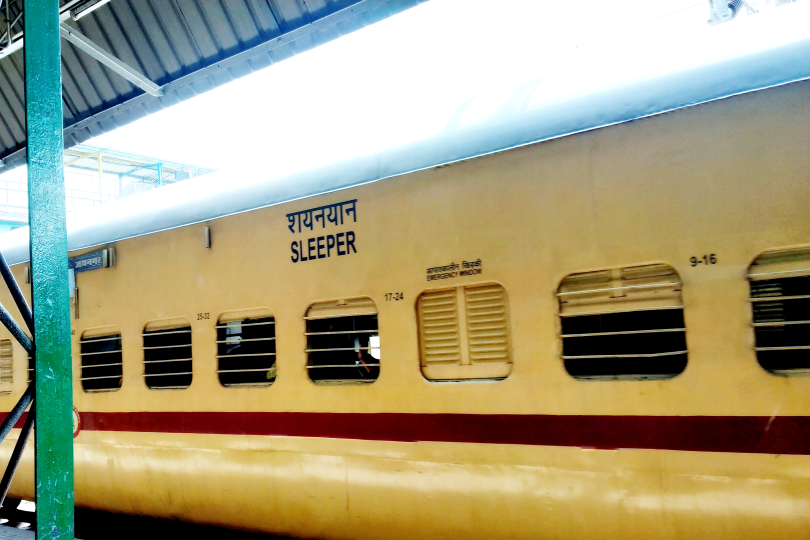
I was one of the many travelers who utilized almost all trains for their travel on various routes in India for nearly 55 years, starting in my early years. This prompted me to conduct observations and studies on how to find improvements in the current lodging facilities, pantry, parcel service coach, and toilets in the existing carriages of all classes and the systems that are related to passenger services between the booking for reservations and the end of travel because I had observed numerous practical problems while traveling.
I have finally developed a few technical strategies for improving the accommodations, pantry section, parcel service section, and toilets for both men and women of all ages by redesigning the carriage and service facilities from the time of reservation to the conclusion of the journey, ensuring complete comfort and maximum security comparably at less cost and time. Besides these, it is also feasible to reduce the operational and maintenance costs since there are some possible scopes for reduction. These strategies are based on a variety of real-world observations and studies.
So that passengers from any part of the world will feel complete satisfaction while traveling on the rails in the Indian region at a lower fare. It is assured that these changes will win the favor of all passengers traveling from India and abroad, and they will also be a milestone for the Indian railways since they will achieve the global benchmark through successful developments in many technical aspects.
SUMMARY
There are more remarkable possibilities related to improving the accommodation facilities in the existing rail coaches.
There are more significant possibilities related to improving the service facilities from booking to the end of travel.
There are more significant possibilities related to reducing the total operational cost as well as the maintenance cost.
The development can be achieved with a comparable budget in four years, gradually.
Passengers at all levels who travel by train in Indian regions will feel more satisfaction.
There are more possibilities to achieve a global benchmark by the Indian railways for the more facilities provided at a lower fare if the developments are made.